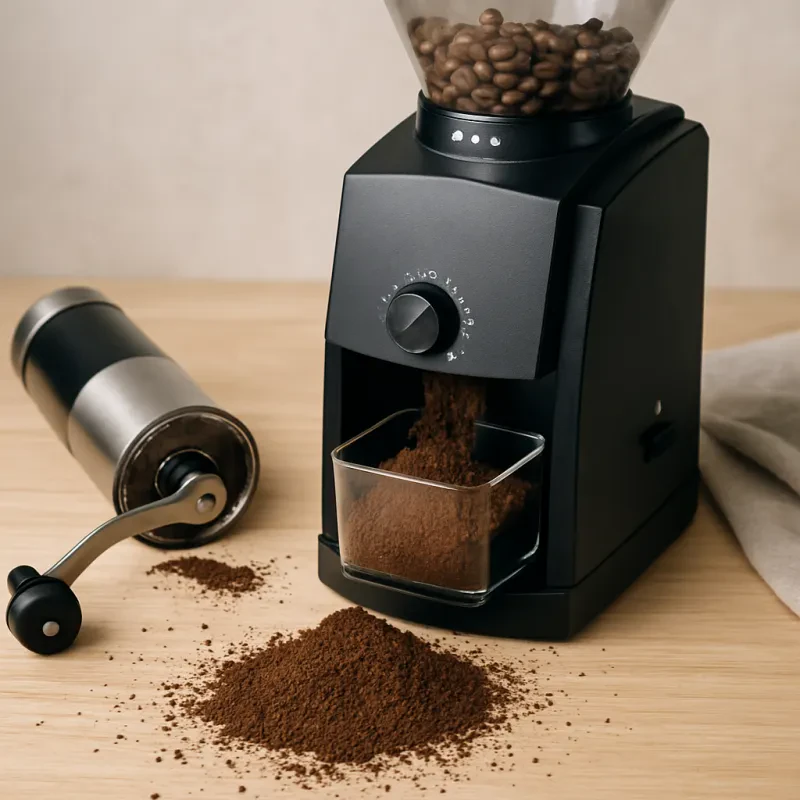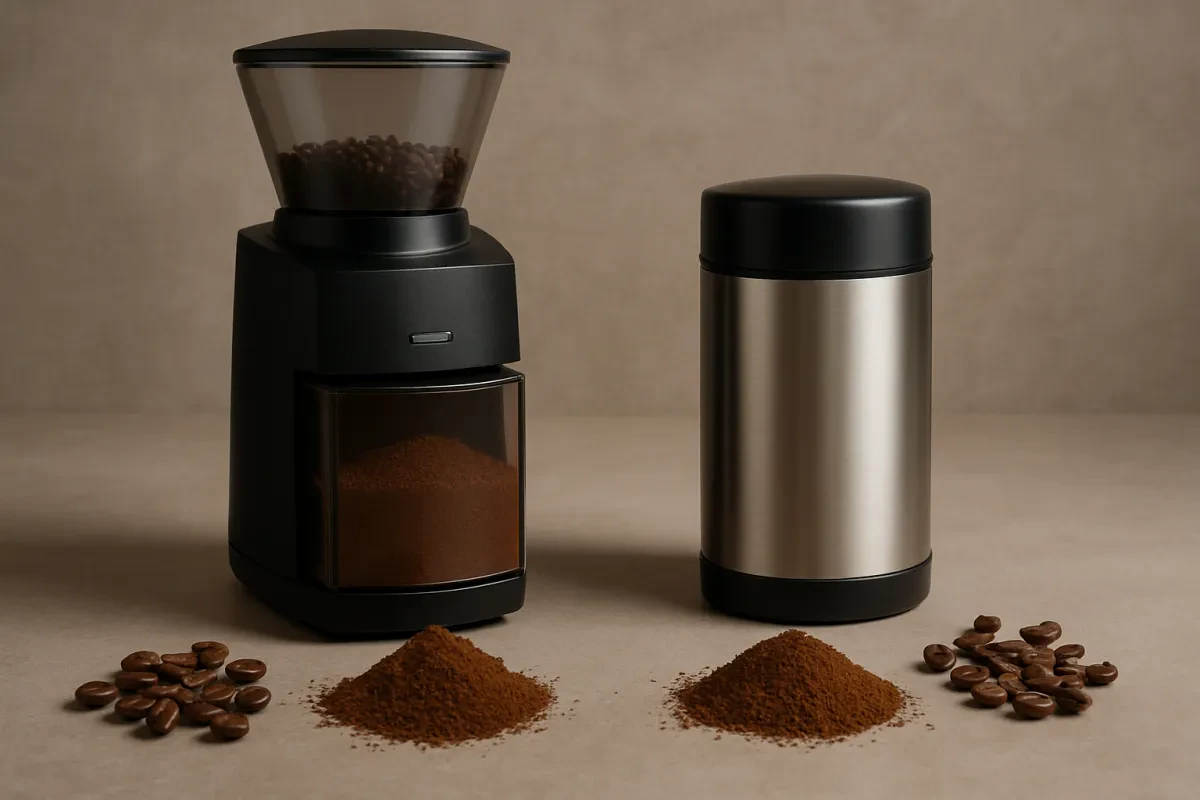
Choosing between a burr grinder and a blade grinder can dramatically impact your coffee's flavor, consistency, and overall brewing experience. Whether you're new to home coffee brewing or looking to upgrade your setup, understanding the differences between these two grinder types is essential for making an informed decision.
What Is a Burr Grinder?
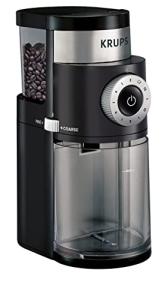
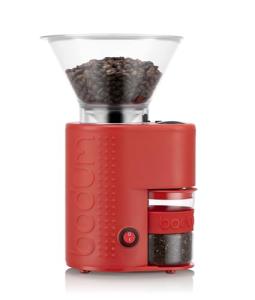
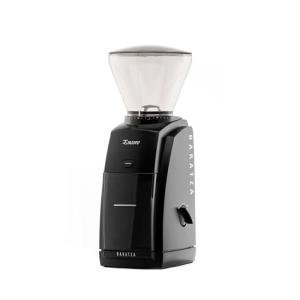
A burr grinder uses two revolving abrasive surfaces (burrs) to crush coffee beans into uniform particles. These burrs can be cone-shaped (conical burrs) or flat and parallel (flat burrs). As beans pass between the burrs, they're ground to a consistent size determined by the distance between the two surfaces.
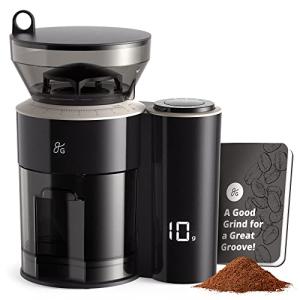
Onyx Black Burr Coffee Grinder with Scale
Grind your coffee beans to perfection and measure with precision every time
Product information
$39.99
Product Review Score
4.35 out of 5 stars
140 reviewsProduct links
Types of Burr Grinders
Conical Burr Grinders feature a cone-shaped ring that sits inside another hollow, cone-shaped ring. Coffee beans are fed from the top and ground between the two surfaces as gravity pulls them downward. These grinders typically operate at lower speeds, producing less heat and preserving more of the coffee's aromatic oils.
Flat Burr Grinders use two identical ring-shaped burrs positioned horizontally. Beans are ground between these parallel discs, which some coffee enthusiasts believe produces even more uniform particle distribution than conical burrs, though this advantage is most noticeable in high-end models.
What Is a Blade Grinder?
A blade grinder operates like a food processor or blender, using a propeller-like blade that spins at high speed to chop coffee beans. The longer you run the grinder, the finer the grind becomes. These grinders are straightforward in design, making them the most affordable option for grinding coffee at home.
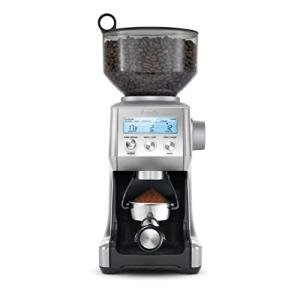
Breville Smart Grinder Pro with 18 oz Capacity
Enjoy perfectly ground coffee every time with precise settings and a generous capacity
Product information
$199.95
Product Review Score
4.39 out of 5 stars
58 reviewsProduct links
Grind Consistency: The Critical Difference
The most significant difference between burr and blade grinders lies in grind consistency, which directly affects extraction quality and flavor.
Why Consistency Matters
When you brew coffee, hot water extracts soluble compounds from the ground beans. Uniform particle size ensures even extraction, where each particle contributes balanced flavors to your cup. Inconsistent grounds lead to simultaneous over-extraction of fine particles (producing bitterness) and under-extraction of larger pieces (creating sourness), resulting in a muddled, unbalanced flavor profile.
Burr Grinder Consistency
Burr grinders excel at producing uniform particle sizes. The fixed distance between burrs ensures that all beans are ground to approximately the same size, creating consistency across your entire batch. This uniformity is particularly crucial for espresso, where even small variations in particle size can ruin a shot.
Blade Grinder Consistency
Blade grinders produce highly inconsistent results. The spinning blade creates a wide range of particle sizes, from fine powder to large chunks within the same batch. The beans closest to the blade get pulverized while those further away receive less contact, creating significant variation. No amount of shaking or tilting can fully overcome this fundamental limitation.
Grind Size Control and Versatility
Different brewing methods require different grind sizes, from extremely fine for espresso to very coarse for French press.
Burr Grinder Control
Most burr grinders feature adjustable settings that allow precise control over grind size. You can select a specific setting and return to it reliably for consistent results. Quality burr grinders offer anywhere from 15 to 60 grind settings, giving you the flexibility to dial in the perfect grind for any brewing method.
Blade Grinder Control
Blade grinders lack precise grind size settings. You control fineness solely by grinding time, which requires guesswork and produces unreliable results. Achieving the same grind twice is nearly impossible, and you can't accurately target specific grind sizes required for different brewing methods.
Heat Generation and Flavor Preservation
Heat during grinding can negatively impact coffee flavor by degrading aromatic compounds and essential oils.
Burr Grinders and Heat
Burr grinders, especially conical models, typically generate less heat because they operate at lower RPMs and crush rather than chop beans. While some heat is inevitable through friction, quality burr grinders minimize this effect, preserving more of your coffee's nuanced flavors and aromas.
Blade Grinders and Heat
Blade grinders spin at extremely high speeds, generating more heat through friction. This can cook your beans slightly, diminishing delicate flavor notes and aromatics. The longer you grind to achieve finer particles, the more heat builds up, compounding the problem.
Price and Value Considerations
Budget is an important factor when choosing between grinder types, but understanding the value proposition helps clarify the investment.
Blade Grinder Costs
Blade grinders are the most affordable option, typically ranging from $15 to $50. This low entry price makes them accessible for casual coffee drinkers or those just beginning their coffee journey. However, the savings come with significant compromises in coffee quality.
Burr Grinder Costs
Burr grinders represent a larger investment, with hand-crank models starting around $30 to $50, entry-level electric models ranging from $100 to $200, and high-quality grinders costing $200 to $500 or more. Professional-grade burr grinders can exceed $1,000. While more expensive upfront, these grinders deliver superior results and typically last much longer.
Best Use Cases for Each Grinder Type
Understanding when each grinder type makes sense helps you make the right choice for your situation.
When a Blade Grinder Makes Sense
Blade grinders might be appropriate if you're on an extremely tight budget, only occasionally drink coffee at home, primarily use pre-ground coffee but want occasional fresh grinding, or are completely new to coffee and want to experiment before investing more. They can also work adequately for cold brew, where the extended brewing time compensates somewhat for inconsistent extraction.
When a Burr Grinder Is Worth It
Invest in a burr grinder if you drink coffee daily, want to taste the full potential of quality beans, use precision brewing methods like pour-over or espresso, care about consistency in your morning routine, or see coffee as a hobby worth investing in. The difference in cup quality easily justifies the additional cost for regular coffee drinkers.
Impact on Different Brewing Methods
The grinder you choose affects various brewing methods differently.
Espresso
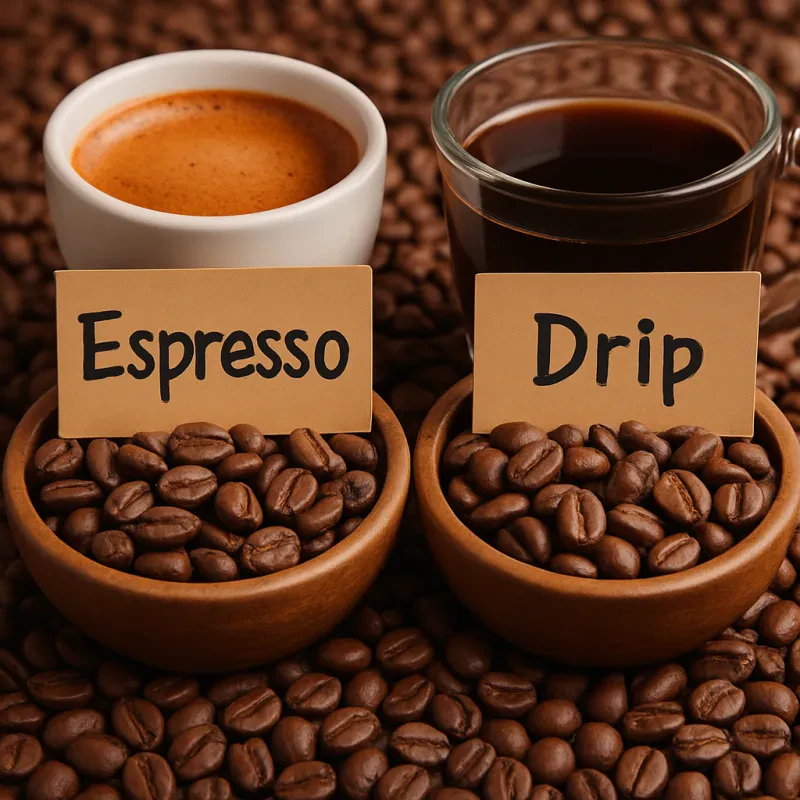
Espresso demands exceptional grind consistency and fine particle size. Burr grinders are essentially mandatory for proper espresso extraction. Blade grinders cannot produce the uniform, fine grind necessary for building proper pressure and achieving balanced extraction in espresso machines.
Pour-Over and Drip Coffee
Pour-over methods like Chemex, Hario V60, and standard drip coffee makers benefit significantly from burr grinder consistency. The even extraction produces cleaner, more defined flavor notes. While blade grinders can technically work for drip coffee, the resulting brew will taste muddier and less complex.
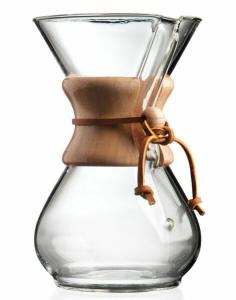
Chemex Classic Series 6-Cup Pour-Over Coffeemaker
Brew rich, flavorful coffee with this elegant and easy-to-use pour-over maker
Product information
$44.00
Product Review Score
4.39 out of 5 stars
226 reviewsProduct links
French Press
French press uses a coarse grind and immersion brewing, making it somewhat more forgiving of grind inconsistency. However, a burr grinder still produces noticeably better results with cleaner flavors and less sediment. Blade grinders often create too many fine particles that slip through the mesh filter, creating a gritty cup.
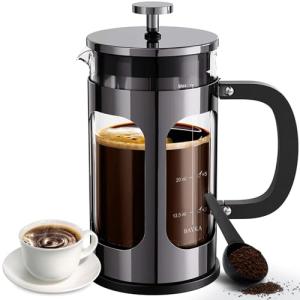
BAYKA French Press Coffee Maker - 34 Ounce
Brew rich, flavorful coffee with this easy-to-use French press for the perfect morning pick-me-up
Product information
$29.99 $26.99
Product Review Score
4.13 out of 5 stars
218 reviewsProduct links
Cold Brew
Cold brew's extended steeping time (12-24 hours) makes it the most forgiving method for blade grinders. The long extraction period compensates for particle inconsistency, though a burr grinder still produces smoother, more balanced cold brew concentrate.
Durability and Longevity
The build quality and lifespan of your grinder affect long-term value.
Burr Grinder Durability
Quality burr grinders are built to last, with metal construction and replaceable burrs. Ceramic burrs can last for decades, while steel burrs typically need replacement after grinding hundreds of pounds of coffee. Many manufacturers offer replacement burrs, allowing you to maintain your grinder indefinitely. A well-maintained burr grinder can easily last 10-20 years or more.
Blade Grinder Durability
Blade grinders have simpler construction with fewer parts, but they're generally made with cheaper materials. The motor and blade can wear out relatively quickly with regular use. Most blade grinders aren't designed for long-term durability and are essentially disposable when they break.
Ease of Use and Convenience
Daily usability matters when you're making coffee every morning.
Operating a Burr Grinder
Electric burr grinders require minimal effort—just add beans, select your grind setting, and press start. Manual burr grinders require hand-cranking but offer portability and no electricity requirement. Both types are straightforward once you've identified your preferred grind setting for each brewing method.
Operating a Blade Grinder
Blade grinders are incredibly simple to operate: add beans and press the button. However, achieving your desired grind requires experimentation with timing, and results vary between grinding sessions. Some users develop techniques like pulsing, shaking, or tilting the grinder to improve consistency, but these workarounds add complexity to what should be a simple process.
Cleaning and Maintenance
Regular cleaning keeps your grinder performing well and prevents stale oils from affecting flavor.
Cleaning Burr Grinders
Burr grinders require periodic cleaning to remove coffee oils and residue. Many models feature removable burrs that you can brush clean or wipe down. Some coffee enthusiasts use grinder cleaning tablets designed to absorb oils. The cleaning process takes a few extra minutes but isn't difficult.
Cleaning Blade Grinders
Blade grinders are easier to clean—simply wipe out the grinding chamber and blade with a dry cloth or brush. However, the chamber design can trap grounds in corners and crevices, requiring more thorough attention to prevent buildup.
Noise Levels
If you're grinding coffee early in the morning while others sleep, noise matters.
Burr Grinder Noise
Electric burr grinders produce moderate noise but generally operate at lower RPMs than blade grinders, creating a deeper, less piercing sound. High-quality models often include sound-dampening features. Manual burr grinders are nearly silent, making them ideal for quiet environments.
Blade Grinder Noise
Blade grinders create loud, high-pitched noise due to their high-speed motors. The sound can be disruptive, especially in apartments or shared living spaces.
Making Your Decision: Which Grinder Is Right for You?
Your ideal grinder depends on your specific situation, priorities, and budget.
Choose a Blade Grinder If:
You're on a very tight budget with less than $50 to spend, you're completely new to coffee and want to experiment first, you only occasionally grind coffee at home, or you primarily make cold brew where consistency is less critical.
Choose a Burr Grinder If:
You drink coffee daily and value quality, you want to maximize the flavor potential of quality beans, you use precision brewing methods like pour-over or espresso, you're willing to invest in better equipment for better results, or you see coffee as a worthwhile hobby. For most regular coffee drinkers, a burr grinder is the better long-term investment.
Upgrade Path: Starting Simple and Growing
If budget is a concern but you're committed to better coffee, consider starting with an entry-level manual burr grinder ($30-$50) rather than a blade grinder. Manual burr grinders like the Hario Skerton or Porlex offer excellent grind quality at blade grinder prices. You'll get burr grinder consistency without the electric grinder cost, and you can upgrade to an electric burr grinder later as your budget allows.
Final Verdict: Burr vs Blade Grinder
For anyone serious about coffee quality, a burr grinder is worth the investment. The consistency, control, and flavor improvement it provides transform your daily coffee experience. Blade grinders serve a purpose for budget-conscious or casual users, but they represent a compromise that most coffee enthusiasts eventually outgrow.
The difference between a great cup of coffee and a mediocre one often comes down to grind quality. By choosing the right grinder for your needs, you're setting yourself up for consistently delicious coffee that showcases the true potential of quality beans. Whether you start with a manual burr grinder or invest in a high-end electric model, prioritizing grind consistency will elevate every cup you brew.